How to Get So Good at Valorant in 2026 That It Feels Like Smurfing
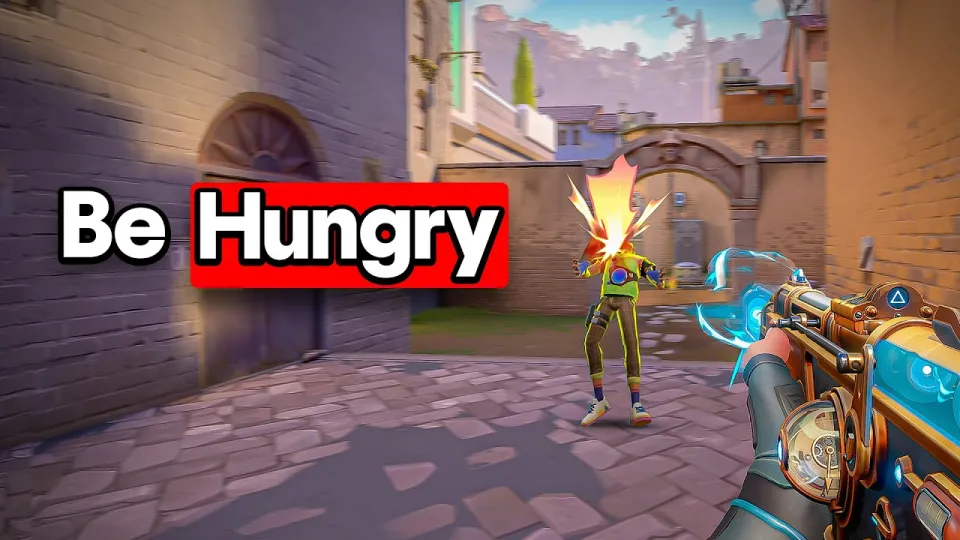
Video: How to Get So Good at Valorant it Feels Like Smurfing
Want articles like this for your own video to promote it on YouTube and Google? Order them through the Telegram bot @sat_sit_bot. It writes articles around your video, embeds the video and publishes them on popular niche websites (no ads). Free trial — 50 articles.
· based on the channel Konpeki
Key takeaways
- Smurf-like play comes from reacting to the enemy instead of running a fixed routine.
- Unpredictability beats raw aim: change timing, angle and rhythm every round.
- Range drills with movement error on and a 0.5 multiplier build real counter-strafe habits.
- Konpeki's Immortal Roadmap Program advertises 5 divisions in 10 weeks via roadmap.gg.
- Aim alone does not climb ranks: utility usage, economy and map plans decide rounds.
Getting so good at Valorant that it feels like smurfing is not about a secret sensitivity or a lucky agent pick — it is about reacting to what the enemy actually does instead of running the same routine every round, and then making your own movement and timing unpredictable enough that opponents cannot read you. The fastest route there is a small set of repeatable habits: disciplined crosshair placement, deliberate peeking, honest review of your own deaths, and a routine you can run in the Range before you queue. If you want structured help instead of solo grinding, Konpeki's Immortal Roadmap Program at roadmap.gg advertises five divisions in ten weeks with coaching support.
What actually separates a smurf from a hardstuck player in Valorant
A smurf is not a player with better reflexes — a smurf is a player whose decisions are one step ahead of the lobby. Watch a high-rank player in a low-rank game and you notice they rarely take fair fights: they swing when the enemy is reloading, reposition after every kill, and stop peeking an angle the moment it gets contested. That is decision speed, not aim speed.
The practical translation for your own games is simple. Before every round, decide one thing you will do differently from the previous round: a different timing on the same angle, a different site, a different utility order. If you always take the same opening duel at the same second, better players will pre-aim you and it will feel like they are cheating. If you vary it, you become the one who feels unfair to play against.
Rank is a lagging indicator of habits. Two players can have identical aim and sit three ranks apart because one of them dies to the same mistake five times a match and the other dies once.
The reaction peek: how to stop walking into pre-aims
Reaction peeking means your first movement is a response to information, not a script. Instead of sprinting onto a site the instant the round starts, you take a piece of information first — a sound cue, a utility line, a teammate's contact — and then commit.
- Hold your default angle with crosshair at head level and your back near cover you can actually use.
- Wait for the enemy's first mistake: a reload, a wide swing, a utility that lands nowhere useful.
- Swing only after that cue, and swing wide enough to clear the whole angle in one motion.
- After the kill, immediately move — never re-peek the same spot from the same position.
This is the habit that makes low-rank lobbies feel easy. You are no longer guessing; you are collecting a cue and answering it. It also fixes the most common complaint in ranked, which is dying to someone who "just knew" where you were — usually they heard you, or you peeked the same angle three rounds in a row.
Building unpredictable movement and counter-strafing
Unpredictability is a skill you can drill, not a personality trait. The core mechanic is counter-strafing: when you want to shoot, you tap the opposite movement key so your character stops instantly instead of sliding, which keeps your first bullet accurate.
A drill that works in the Range: strafe left and right with A and D while keeping your crosshair on a bot's head, and fire one shot each time your movement switches direction. The question of whether to release the keys or keep alternating is answered by the goal — you want the shot to land at the exact moment your velocity hits zero, so the cleanest version is a hard stop on the switch, then a new strafe. If full-speed strafing is too fast to read at first, turn movement error on and set its multiplier to 0.5 so the feedback is gentler while you build the timing.
Once the stop-shoot rhythm is automatic, add variety: sometimes stop and shoot, sometimes strafe through and shoot late, sometimes crouch-spray, sometimes disengage entirely. Opponents adapt to patterns within two or three rounds, so the player who never repeats a pattern is the one who looks like a smurf.
Aim routines that transfer from the Range to ranked
Range scores mean nothing if the routine does not match real fights. A useful Valorant warmup has three parts and takes under fifteen minutes.
- Tracking and micro-adjustment: 100 bot kills with strafing between shots, not standing still.
- Flick precision: short, controlled flicks to the head, resetting your crosshair to a neutral angle after every kill.
- Movement integration: counter-strafe stops on a wall or bot so the stop-shoot timing becomes muscle memory.
Then take one habit into your first ranked game and grade yourself on it only. If your goal for the match is "I never re-peek the same angle twice," you can win that goal even in a loss, and that is how improvement compounds instead of resetting every session.
Crosshair placement deserves its own rule: your crosshair should already be where the enemy's head will appear before you see them. Most players lose duels in the half-second they spend lifting their aim from the floor to head level.
The non-aim skills that make you look like a smurf
Aim wins duels; everything else wins rounds. Utility usage, economy and map plans are where a smurf's advantage becomes visible to teammates.
- Utility: use smokes and flashes to take space, not to react after a teammate dies. A flash that lands before your entry is worth more than three that land after.
- Economy: buy with the team. A full-buy round lost to a solo force-buy is a round thrown away, and eco discipline is one of the clearest rank separators.
- Map plans: have one default and one aggressive setup per side, and know which one you are running before the barrier drops.
- Communication: one clear call — "three mid, one rotating" — beats five overlapping voices.
None of this requires better mechanics. It requires deciding in advance, which is exactly what high-rank players do and low-rank players skip.
Common questions from players trying to climb
The questions that come up most often under coaching content are about learning style, platform and expectations, and most of them have practical answers.
- Can you learn movement and peeking from guides alone? Yes, but only if you drill the specific mechanic in the Range before applying it in ranked. Reading about counter-strafing changes nothing; ten minutes of stop-shoot reps changes your first duel.
- Does this work on console? The decision-making layer — reaction peeking, utility timing, economy — transfers directly to Valorant on PS5 and Xbox. Only the input mechanics differ, so adjust sensitivity and practice strafing with a controller.
- How long until it feels like smurfing? Players who fix one habit per session typically notice a clear difference in duel outcomes within a few weeks, and rank follows later because rank also depends on teammates and volume of games.
- Is there an age or rank requirement for coaching programs? Programs vary; most ask about your current rank and available practice time rather than age, and a short call is usually the way to find out whether you fit.
Useful links
- Immortal Roadmap Program (5 divisions in 10 weeks): https://roadmap.gg/v/lUfrMRb74SE
- Free coaching resources and office hours on Discord: https://www.discord.gg/UnRETVmRpV
- Twitch: https://www.twitch.tv/konpekichan
- Twitter: https://twitter.com/coachpeki
- TikTok: https://www.tiktok.com/@coachpeki
Making smurf-level play your default
Feeling like a smurf in Valorant comes down to reacting instead of scripting, staying unpredictable, and drilling the mechanics that support those decisions until they are automatic. Aim matters, but the players who climb fastest are the ones who stop repeating the same mistake and start varying timing, angle and utility every round. Konpeki's breakdown of this exact idea is worth watching alongside your own replays, because the concepts only stick when you connect them to deaths you actually had. Pick one habit, drill it in the Range, apply it in ranked, and grade yourself on the habit rather than the result. If you want the process accelerated with a structured plan and coaching, you can book a free call through the Immortal Roadmap Program at roadmap.gg and see whether it fits your goals.
Source: How to Get So Good at Valorant it Feels Like Smurfing · Markdown version
Questions & answers
How long does it take to get so good at Valorant that it feels like smurfing?
There is no fixed number, but players who fix one habit per session usually see a clear change in duel outcomes within a few weeks. Rank moves slower than skill because it also depends on match volume and teammates. The key is grading yourself on the habit, not on the round result.
Do I need high sensitivity or a special crosshair to play like a smurf?
No. Smurf-level play comes from decisions, timing and movement discipline rather than settings. A comfortable sensitivity and a simple, visible crosshair are enough; what matters is that your crosshair is already at head level before the enemy appears.
Can console players use the same approach on PS5 or Xbox?
Yes. Reaction peeking, utility timing, economy discipline and map plans transfer directly to console Valorant. Only the input mechanics differ, so you should adjust sensitivity and practice strafing and stopping with a controller instead of a mouse.
Should I release movement keys when shooting during strafe drills?
The goal is to fire at the moment your character's velocity reaches zero, so a hard stop on the direction switch is the cleanest version. If full-speed strafing is hard to read at first, enable movement error and lower its multiplier to around 0.5 while you build the timing.