Rust solo survival works when one player holds an OP monument and turns angry neighbors into content
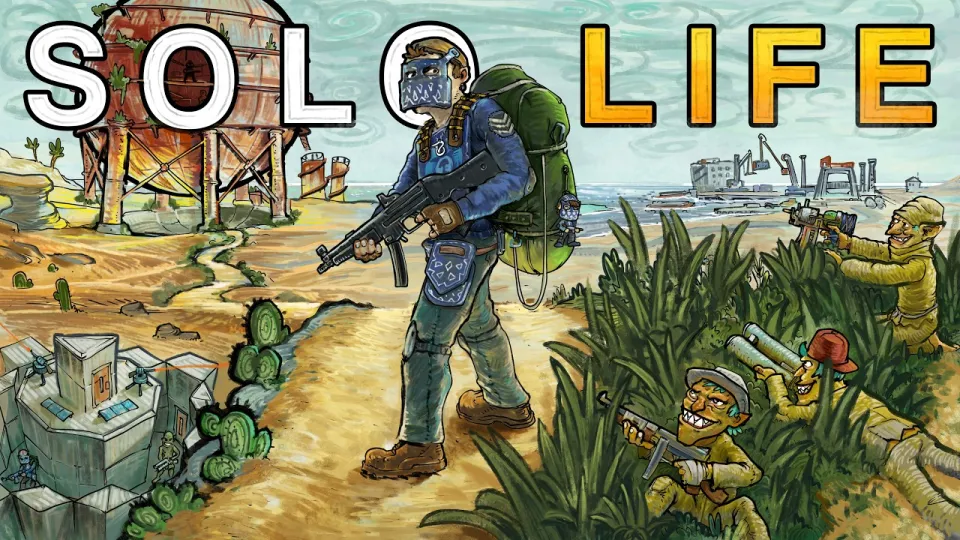
Video: Rust - THE SOLO LIFE V16
Want articles like this for your own video to promote it on YouTube and Google? Order them through the Telegram bot @sat_sit_bot. It writes articles around your video, embeds the video and publishes them on popular niche websites (no ads). Free trial — 50 articles.
· based on the channel Blooprint
Key takeaways
- The Solo Life V16 from Blooprint is built around one premise: a solo player claims and holds an OP monument while multiple neighbors try to push him out.
- The episode landed right after A Solo's Journey 4, and the channel confirmed solo content is now a priority rather than an occasional side project.
- Solo success in Rust comes down to three things: monument control, a base layout that survives an online raid, and reading when a fight is worth taking.
- Friendly neighbors and improvised allies matter as much as aim — viewers singled out one neighbor who helped during a raid defense.
- Night fights, LR sight pictures, eoka one-taps and a parachute drop from cargo are the recurring skill checks the episode showcases.
Rust solo survival is about claiming one high-value monument, fortifying a base that can survive an online raid, and turning every neighbor who wants your loot into either a fight you choose or an ally you keep. Blooprint's The Solo Life V16 is a full demonstration of that loop: one player holds an OP monument alone while several angry neighbors try to take it back. Anyone looking for a free entry point into the shooter genre can also grab the War Thunder bonus via the sponsor registration link, the same one promoted in the video.
The episode arrives right after A Solo's Journey 4, and the channel's own framing is blunt: the solo life is back. That matters for anyone searching "rust" for practical solo guidance, because the format is not a highlight reel of lucky wipes — it is a running record of decisions about positioning, base design and when to log off.
What holding an OP monument solo actually requires
Controlling a strong monument alone is a logistics problem before it is a shooting problem. A monument gives you loot density, but it also concentrates traffic: every geared group on the server eventually rotates through it, and a solo player has no second body to watch the other angle.
The practical checklist that a monument hold depends on:
- A stash or small forward base within sprinting distance of the monument so deaths cost you minutes, not hours.
- A predictable exit route that does not funnel you into the main approach other players use.
- Enough low-tier gear to re-enter the fight immediately — a solo player loses the monument the moment respawn time exceeds the enemy's patience.
- Audio discipline: footsteps and door sounds are the only early warning a lone player gets.
- A hard rule for abandoning the hold when a group commits more players than you can trade against.
Why neighbors become the real opponent in a solo wipe
Multiple hostile neighbors change the math of a solo wipe more than any single geared group does. On a crowded server, the players living within a few grids of your base are the ones who hear your doors, see your lights and know when you leave — they are a permanent threat that does not need to organize a raid to ruin your session.
That is why the episode's central tension is a monument hold under pressure from several directions at once. The counterplay is social as much as mechanical: identify which neighbor is a genuine raider, which is opportunist, and which will trade or ignore you. Viewers of the series repeatedly point out that a good friendly neighbor can be worth more than a crate of guns, and that dynamic shows up in the raid defense here.
Base design and raid defense for a solo player
A solo base does not need to be unlootable, only expensive enough that a group questions the payoff. The design logic that holds up under an online raid:
- Separate your loot into more than one pocket so a single breach does not end the wipe.
- Build so that the attacker's approach is long, exposed and audible.
- Keep a fighting kit and a repair kit accessible from inside the core, not from a room you have to cross.
- Use the base as a weapon: door camping, peeks and tight corridors favor the defender who knows the layout.
- Accept that some raids cannot be won — the goal is to make the attacker spend more than they extract.
During an online raid defense, a solo defender's biggest advantage is information. The attackers must commit bodies to the breach; you only need to hold one angle and rotate. The episode's raid defense is a clean example of two solo players effectively cooperating against a larger push, which is exactly the scenario base design should enable.
PvP skills the episode keeps testing
Mechanical skill in Rust is a set of small, repeatable checks rather than one big duel. The recurring ones in this episode:
- Night fights. Darkness is a real tactical layer, and viewers consistently joke that night vision in Rust still leaves you blind. Sound and muzzle flash do more work than optics.
- LR sight pictures. Long-range rifle work rewards sight alignment and patience over spray; the editing around those fights drew specific praise.
- Eoka one-taps. A primitive pistol gamble that decides early-game fights; the community's running joke about the one-tap eoka is really about risk tolerance.
- Cargo and parachute rotations. Dropping onto cargo by parachute compresses travel time and turns a contested monument into a solo opportunity.
- Dome and other vertical monuments. Height advantage decides fights, but it also traps you if you get pinched on the stairs.
The through-line: a solo player wins by taking fights where the enemy has to come to them.
Common questions solo players ask about this style of wipe
Solo Rust content draws the same doubts every time, and they are worth answering directly.
"Isn't holding a monument alone just feeding a group?" Only if you treat the hold as permanent. A monument is a temporary resource: farm it, bank the loot, leave before the group commits. The solo player who dies with a full inventory at a monument made a scheduling error, not a skill error.
"How do you stay calm with several neighbors hunting you?" By lowering the stakes of each death. Forward stashes, cheap kits and short trips convert a catastrophic loss into a two-minute reset. The relaxed tone of these videos comes from preparation, not from the game being gentle.
"Is it worth teaming with a random neighbor?" Sometimes, briefly. Ad-hoc cooperation during a raid defense is low-commitment and high-value; formal alliances with strangers usually end with someone learning your base layout.
"How much time does a solo wipe really take?" More than a group wipe for the same progress, which is why monument control and efficient farming routes matter more than raw playtime.
Useful links
- War Thunder free bonus, PC and consoles: https://wtplay.link/blooprint
- War Thunder free bonus, mobile: https://wtm.game/blooprint
- Blooprint on Twitch: https://www.twitch.tv/blooprint
- Blooprint on Kick: https://kick.com/blooprint
- Blooprint on TikTok: https://www.tiktok.com/@blooprintgames
The takeaway from a solo monument hold
Holding an OP monument alone in Rust is a test of preparation, not bravado: forward stashes, an audible base layout, a willingness to abandon a losing position and a clear read on which neighbors are threats. The Solo Life V16 shows the full arc — monument pressure, an online raid defense, night fights and a parachute rotation onto cargo — without pretending the odds are fair. The channel Blooprint built this episode as a practical template for solo players, and the pattern is repeatable: pick one valuable objective, make your losses cheap, and let the neighbors spend their time on you instead of their own progression. If you want to try the sponsored game behind the episode, the bonus is still available through the War Thunder sign-up link.
Source: Rust - THE SOLO LIFE V16 · Markdown version
Questions & answers
Can you realistically hold a monument alone in Rust?
Yes, but only temporarily. A solo player should treat a monument as a farm window rather than a permanent claim: bank loot in a forward stash, keep a cheap re-kit nearby and leave before a group commits enough players to overwhelm you. The hold works when your losses stay cheap and your exits stay short.
What makes a solo base survive an online raid?
Split loot across multiple pockets, force attackers into long exposed approaches and keep a fighting kit inside the core. You are not trying to make the base unlootable, only expensive enough that the attackers spend more than they gain. Knowing your own layout better than the raiders is the defender's main edge.
Why do viewers say night fights in Rust are still unreadable?
Because darkness plus limited night vision leaves most players relying on sound, muzzle flash and map knowledge rather than sight. That is also why night rotations and quiet approaches are so effective — the attacker usually hears you before they see you.
Is it worth cooperating with a friendly neighbor as a solo?
Brief cooperation during a raid defense is usually worth it, since a second body changes the fight without exposing your base layout. Long-term alliances with strangers are riskier, because trust in Rust tends to end with someone knowing exactly where your loot room is.